The consensus read on IBM’s 25% collapse is that enterprise AI passed the company by. That reading is wrong, and the segment data says so. IBM’s AI-adjacent lines actually grew in the second quarter: Software revenue rose 5% to $7.8 billion, Red Hat hybrid cloud grew 11%, and the Data segment grew 19%. What broke was Infrastructure, down 7% against management’s guidance for only a slight decline. On 14 July 2026, IBM shares fell 25% in a single session, the worst day in the company’s 115-year history, exceeding the 23.7% drop of 19 October 1987. Roughly $67 billion of market capitalisation vanished. With the stock near $210 after the formal Q2 report, the Street’s range now runs from a $175 floor to a $288 bull case. This is not a story about AI demand. It is a story about who captured the budget.
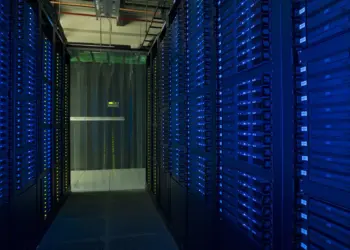
Here is the insight that most coverage has missed: the dollars that left IBM’s software line did not leave the technology sector at all. They moved one layer down the stack, into memory and servers. CEO Arvind Krishna said customers adjusted technology budgets because AI data-centre demand made servers, storage and memory harder to obtain, and that IBM “did not expect customers to shift so much of their spending away from software and toward buying AI hardware.” Read that alongside what has happened to memory pricing, and IBM becomes the first large-cap enterprise software casualty of AI hardware scarcity. The same corporate budget line that used to renew a transaction-processing licence is now pre-buying DRAM ahead of price increases. Having tracked this rotation across our Micron MU bull and bear case and our Nvidia NVDA breakdown, the pattern is consistent: hardware scarcity is not merely lifting the suppliers, it is actively cannibalising the software vendors those same customers buy from. IBM is the first company large enough to make that transfer visible in a single print.
Key Facts
- IBM fell 25% on 14 July 2026, its worst single day ever, beating the 23.7% drop of 19 October 1987 — CNBC, 14 July 2026
- About $67 billion of market value was erased in one session — Forbes, 14 July 2026
- Q2 2026 revenue was $17.2 billion, up 1% year over year; operating EPS $2.93, GAAP diluted EPS $2.27 — IBM Q2 2026 release, 22 July 2026
- Segment split: Software $7.8bn (+5%), Consulting $5.3bn (flat), Infrastructure $3.8bn (−7%) — IBM Q2 2026 release
- Gross margin 57.7%, down 1.0 percentage point year over year; year-to-date free cash flow $4.8bn, flat — IBM Q2 2026 release
- Analyst consensus target $271.25 across 23 analysts; high $350, low $175; 14 buy, 7 hold, 3 sell — StockAnalysis, July 2026
- Market capitalisation fell to roughly $194–198 billion by 22 July, from over $260 billion a month earlier — StockAnalysis, 22 July 2026
What Actually Happened, and Why the Market Overreacted to the Wrong Number
IBM pre-announced. That detail matters more than the headline percentage. On 14 July the company released preliminary Q2 figures showing adjusted earnings of $2.93 a share on revenue of $17.2 billion, against Street expectations of roughly $3.01 and $17.86 billion. A pre-announcement of that kind is a management decision to absorb the entire repricing in one session rather than let it leak across a quarter, and the market obliged with the steepest decline in the company’s history.
The mechanism behind the miss is specific and, importantly, not about AI adoption. Krishna pointed to weakness in mainframe and transaction-processing software as organisations rushed to buy hardware ahead of expected price increases. Infrastructure revenue fell 7% in a quarter where management had modelled a slight decline. Think of it as a plumbing problem rather than a demand problem: the water is still flowing, but it is being diverted into a different pipe before it reaches IBM’s highest-margin lines. Enterprise buyers did not cancel their digital transformation programmes. They resequenced them, front-loading scarce physical components and deferring the licence renewals that IBM books at far better margin.
Krishna was unusually direct about execution rather than blaming the cycle outright. “These conditions require our teams to execute perfectly, and this quarter we faltered,” he said, adding: “We did not adapt and move quickly enough, and numerous large deals failed to close.” That last clause is the one institutional holders will re-read. Deals that fail to close are, in principle, deals that can still close later; deals lost to a competitor are not. Which of those two IBM is actually describing is the single largest unresolved question in the stock.
Industry analysts read the shift as structural rather than idiosyncratic. “That is rare, as it is critical infrastructure, but it definitely shows the AI pull in this market,” said Holger Mueller, VP and Principal Analyst at Constellation Research, on the scale of the Infrastructure decline.
How the Street and the Wider Industry Responded
The analyst response fractured in a way that is unusual after a print this bad, and the spread is where the trade lives. Barclays analyst Raimo Lenschow cut his target to $288 from $350 but kept an Overweight rating. Jefferies maintained Buy on 21 July while cutting from $320 to $260. Stifel went further down, to $235 from $290, while also keeping a Buy. Not one of those three downgraded the rating. They repriced the multiple and left the thesis intact.
At the extreme, Wedbush’s Dan Ives held his $350 target through the crash, arguing the miss reflects a bad quarter of execution rather than a broken AI strategy, and pointing to first-quarter z17 mainframe revenue growth of 51% and total IBM generative AI bookings of $12.5 billion. Ives kept IBM on his “IVES AI 30” list. Whether that is conviction or anchoring, the $175 to $350 spread across 23 analysts is one of the widest on any Dow component right now, and wide dispersion after a capitulation event has historically been where asymmetric setups appear.
Beyond the sell side, the more telling response came from the companies on the other side of the trade. The hardware suppliers absorbing IBM’s displaced budget have not flinched: memory and foundry names continue to guide into scarcity, a dynamic we mapped in our TSMC TSM bull and bear case. IBM itself is not standing still either — the company continued shipping enterprise AI product through the quarter, including the agent-based additions to its enterprise AI suite announced in May.
Others framed the squeeze as budgetary physics rather than a vendor-specific failure. “IT budgets are growing but price increases are growing more quickly than budgets,” said Patrick Moorhead, CEO and Chief Analyst at Moor Insights & Strategy, who added: “The good news for IBM is that their technology is strategic and can’t be held off.” Shay Boloor, Chief Market Strategist at Futurum, put the same point more bluntly: “Companies are prioritizing scarce hardware and delaying projects they believe can wait.”
Market Impact and the Data Synthesis Nobody Ran
Here is the contrarian read on the 22 July confirmation print, and it cuts against the relief narrative. IBM’s formal Q2 was widely written up as a beat: $2.93 adjusted against a $2.86 estimate, and $17.16 billion of revenue against $16.86 billion. But that is the reset consensus, marked down in the six days after the pre-announcement. Measured against the original LSEG numbers of $2.97 and $17.58 billion, IBM missed both lines. The company beat a bar it had itself lowered a week earlier. Shares fell about 2.1% in the 22 July session before recovering roughly 2% after hours — a market visibly unsure which consensus it was grading against.
Now combine two figures that no single source puts side by side. IBM guided full-year constant-currency revenue growth down to 4–5% while simultaneously guiding free cash flow up by about $1 billion year over year. A company shedding revenue growth but adding a billion in cash generation is not a company in operational collapse; it is a company whose mix is shifting away from low-margin iron toward software and services, which is precisely the transformation IBM has spent a decade selling to investors. The market repriced the revenue line and ignored the cash line.
| Bull case — $288 (Barclays) | Bear case — $175 (Street low) |
|---|---|
| Software +5%, Red Hat +11%, Data +19% — the strategic mix is still compounding | Infrastructure −7% versus guidance for a slight decline signals forecasting failure, not weather |
| Free cash flow guided up ~$1bn despite lower revenue growth | Gross margin down 1.0pt to 57.7%; mix shift is compressing profitability |
| “Deals failed to close” implies deferral, so the pipeline can still convert | If those deals were lost rather than deferred, H2 does not recover them |
| 14 of 23 analysts still rate Buy; nobody downgraded the rating after the crash | Securities-fraud investigations into the pipeline disclosure create a headline overhang |
| Trading near $210 against a $271.25 consensus target | Dow-component status means forced index selling has already happened once |
The valuation maths is straightforward from here. At roughly $210 with a $271.25 consensus, the implied upside is about 29%. The bull case at $288 implies roughly 37%; the bear case at $175 implies roughly 17% downside. That is a positively skewed distribution — but only if you accept management’s framing that the failed deals were deferred. Our SPY bull and bear analysis makes the same point at index level: single-name shocks inside a record-high tape tend to be repriced faster than they are re-underwritten.
The Regulatory and Disclosure Overhang
The crash triggered a second problem that has nothing to do with mainframes. Securities law firms have opened investigations into whether IBM misrepresented the pace at which it was securing new business and the strength of its IBM Z product outlook before issuing the preliminary warning. The specific question is the deal conversion rate: whether investors were told a pipeline was converting when management knew it was not.
This is where Krishna’s own words become a legal fact pattern rather than a candid admission. “We did not adapt and move quickly enough, and numerous large deals failed to close” is exactly the sentence plaintiffs’ counsel will pair against prior-quarter commentary on pipeline strength. The gap between the two is the case. IBM has not been charged with anything, and investigation notices issued by claimant firms are routine after any double-digit single-day drop — they are marketing as much as they are litigation. But they impose a real cost: they cap the multiple until they resolve, because institutional buyers underwriting a recovery must now also underwrite an unquantified legal tail.
There is a broader disclosure tension here that regulators have not yet addressed. Pre-announcing bad numbers is, in principle, the shareholder-friendly act — it compresses information asymmetry into a single session rather than letting selective knowledge diffuse. Yet the pre-announcement is precisely what created the record one-day move, which is what attracted the investigations. Under the current framework, a management team that discloses early is exposed to more litigation risk than one that lets the miss emerge gradually at the scheduled print. That is a perverse incentive, and until the SEC clarifies how pipeline-conversion commentary should be framed under forward-looking-statement safe harbours, boards at every large-cap enterprise vendor will read IBM’s July as a cautionary tale about candour.
What Happens Next: Three Predictions
First, the H2 print is the entire thesis and it arrives in October. If Infrastructure returns toward flat and the deferred deals convert, the $260–$288 cluster becomes the operative range and the crash is remembered as a mispricing. If Infrastructure declines again and management cuts the 4–5% constant-currency guide a second time, the $175 low becomes the anchor. There is very little middle ground, because the bull and bear cases rest on opposite readings of the same sentence from the CEO.
Second, expect IBM to lean harder into the cash-return story before the growth story recovers. Guiding free cash flow up roughly $1 billion while cutting the revenue growth outlook is the classic setup for management to redirect investor attention toward buybacks and the dividend. Watch the Q3 call for language shifting from growth rates toward per-share metrics.
Third, IBM will not be the last enterprise software vendor to report this problem. If the causal chain Krishna described is real — scarce AI hardware pulling budget forward and pushing software renewals right — then it is a sector-wide condition, not an IBM-specific one. IBM simply reports early enough in the season to surface it first. The vendors most exposed are those selling into the same infrastructure budget line rather than a separate innovation budget. We would expect at least one more large-cap enterprise software miss attributed to hardware pre-buying before the Q3 season closes, and the read-through we published in our analysis of where Nvidia’s profit actually comes from suggests the budget transfer is still accelerating rather than normalising.
Frequently Asked Questions
Why did IBM stock crash 25% in July 2026?
IBM pre-announced preliminary Q2 results on 14 July showing adjusted EPS of $2.93 on revenue of $17.2 billion, below Street expectations of about $3.01 and $17.86 billion. CEO Arvind Krishna attributed the shortfall to customers diverting budget toward scarce AI hardware, which hit mainframe and transaction-processing software sales. The stock fell 25%, its worst day ever, erasing roughly $67 billion in market value.
What is the bull case for IBM stock?
The bull case targets $288, Barclays’ post-crash Overweight level. It rests on Software growing 5%, Red Hat up 11% and Data up 19%, plus full-year free cash flow guided about $1 billion higher despite the weaker revenue outlook. If the large deals Krishna described as failing to close were deferred rather than lost, H2 conversion restores the growth narrative.
What is the bear case for IBM stock?
The bear case is $175, the lowest of 23 analyst targets. Infrastructure fell 7% against guidance for only a slight decline, which points to a forecasting failure rather than a one-off. Gross margin also slipped 1.0 percentage point to 57.7%, and pending securities-fraud investigations into IBM’s pipeline disclosures create an unquantified overhang.
Did IBM beat earnings on 22 July 2026?
Only against the reset bar. IBM’s $2.93 adjusted EPS and $17.16 billion in revenue beat the post-warning consensus of $2.86 and $16.86 billion, but missed the original LSEG estimates of $2.97 and $17.58 billion. Shares fell about 2.1% in the session before recovering roughly 2% after hours.
What is IBM’s analyst price target?
The consensus 12-month target is $271.25 across 23 analysts, with a high of $350 from Wedbush’s Dan Ives and a low of $175. The rating split is 14 buy, 7 hold and 3 sell. Notably, no analyst downgraded their rating after the crash — the cuts were to price targets only.
Is IBM’s problem AI disruption?
The segment data argues no. IBM’s AI-adjacent lines grew: Software +5%, Red Hat +11%, Data +19%. The decline was concentrated in Infrastructure, down 7%, as customers pre-bought scarce servers, storage and memory ahead of price increases. It is a budget-timing problem rather than evidence that IBM has lost its enterprise AI position.
This article is for information purposes only and does not constitute investment advice. Figures are accurate as of 23 July 2026.