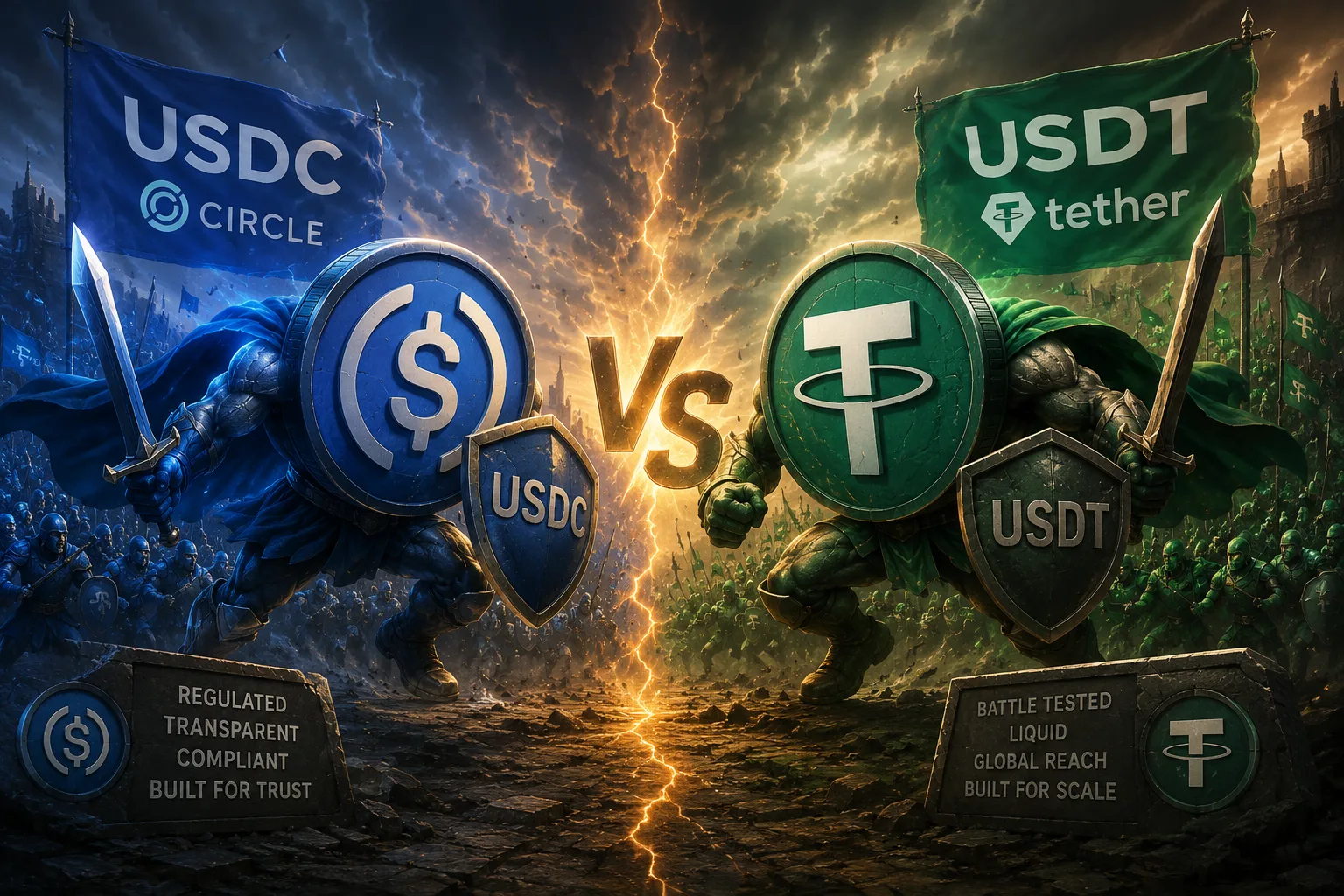
Two numbers in CoinGecko’s newly published Q2 2026 Crypto Industry Report appear to tell completely different stories about USDC.
On one hand, Circle’s stablecoin captured an all-time high 12.5% share of total cryptocurrency trading volume during the quarter, surpassing its previous record of 11% set in the fourth quarter of 2023. On the other, USDC recorded the largest absolute decline in circulating supply among major stablecoins, falling to $73.5 billion, while Tether’s USDT remained broadly stable at approximately $184.4 billion and increased its share of total stablecoin supply to around 60%.
The figures are not contradictory. They measure two different things.
Trading volume reflects where exchanges, market makers and traders prefer to transact. Circulating supply reflects where capital chooses to sit between trades, whether for yield generation, treasury management or long-term liquidity. Understanding why one metric reached a record while the other moved sharply lower helps explain how the stablecoin market is evolving beyond simple market capitalisation rankings.
One Stablecoin Won Trading While the Other Won Supply
According to CoinGecko’s Q2 report, USDC accounted for a record 12.5% of total cryptocurrency trading volume during the quarter, the highest level ever recorded for the stablecoin.
That milestone is particularly notable because it came despite USDC’s circulating supply shrinking significantly over the same period. Circle’s stablecoin finished the quarter with approximately $73.5 billion outstanding after posting the largest absolute reduction in supply among major stablecoins.
Tether, by comparison, maintained a circulating supply of roughly $184.4 billion, leaving its overall market position largely unchanged while increasing its share of the global stablecoin market to approximately 60%.
Viewed only through market capitalisation, the quarter belonged comfortably to Tether. Viewed through trading activity, however, USDC quietly achieved one of its strongest quarters since launch.
Why Exchanges Increasingly Prefer USDC
The increase in trading activity did not happen by accident.
Over the past year, USDC has expanded its presence across centralised exchanges, becoming the preferred quote currency for a growing number of spot and derivatives markets. Several exchanges have continued replacing or reducing support for alternative stablecoins while increasing USDC trading pairs, giving traders more opportunities to transact using Circle’s token.
Institutional adoption has also played a role.
Many regulated trading firms and market makers continue to favour USDC because of its regulatory positioning, reserve transparency and integration into traditional financial infrastructure. As a result, a larger proportion of high-frequency trading volume now flows through USDC even when investors ultimately hold other assets between transactions.
That distinction is important. Stablecoins increasingly perform different functions depending on the user. One token may dominate trading activity while another dominates idle balances held in wallets, lending protocols or treasury reserves.
Why Supply Fell Anyway
If trading activity reached record levels, why did circulating supply decline?
The answer lies outside exchanges.
Circulating supply expands when new USDC is minted and contracts when investors redeem tokens for U.S. dollars. Those redemptions are influenced by much more than trading activity.
The higher interest-rate environment has continued to shape stablecoin demand throughout 2026. Investors managing large cash balances increasingly compare the returns available from holding stablecoins against money market funds, Treasury bills and other yield-generating instruments.
Where attractive off-chain yields exist, some institutional investors have preferred redeeming stablecoins rather than leaving capital idle on blockchain networks.
In other words, USDC appears to have become increasingly efficient as a transactional asset even as some long-term holders reduced their balances.
Why Tether Still Holds the Advantage
Despite USDC’s record trading share, Tether continues to dominate the metric that many investors still watch most closely: circulating supply.
A stablecoin with approximately 60% of the global market enjoys powerful network effects.
Liquidity attracts liquidity. The largest stablecoin typically offers the deepest trading books, the broadest exchange support, the widest DeFi integration and the greatest acceptance for cross-border transfers.
That scale makes it difficult for competitors to close the gap quickly, even when they outperform in narrower areas such as institutional trading activity.
For Tether, maintaining market leadership also reinforces confidence among users who prioritise liquidity above all else. The larger the circulating supply, the easier it becomes to move significant amounts of capital without affecting market pricing.
June Showed Stablecoins Are Becoming Financial Infrastructure
The quarter also coincided with another important milestone for the industry.
Stablecoin transaction volumes reached record levels during June, reflecting continued growth in payments, settlement and institutional usage beyond cryptocurrency trading alone. Increasingly, stablecoins are serving as financial infrastructure rather than simply acting as digital cash for crypto markets.
That trend helps explain why multiple metrics now matter.
Transaction volume measures how frequently stablecoins are used. Circulating supply measures how much capital remains parked within each ecosystem. The two do not necessarily move together.
What Investors Should Watch in the Second Half
The second half of 2026 is likely to determine whether USDC’s record trading share translates into renewed supply growth.
If exchange adoption continues expanding while institutional demand for regulated stablecoins strengthens, higher trading activity could eventually support increasing circulation as more users choose to hold USDC balances between transactions.
Conversely, if interest rates remain elevated and investors continue favouring higher-yielding alternatives for idle cash, supply growth may remain subdued even as trading volumes continue setting records.
Tether, meanwhile, enters the second half of the year from a position of strength. Its dominance in circulating supply continues to provide liquidity advantages across centralised exchanges, decentralised finance and international payments.
The lesson from CoinGecko’s latest report is that stablecoin competition can no longer be judged by market capitalisation alone.
USDC won one of the industry’s most important measures in the second quarter: where cryptocurrency trading actually happened. Tether retained leadership in the metric that underpins liquidity, treasury management and network effects: where capital chose to stay.
Those two leadership positions are becoming increasingly distinct, and how they evolve over the remainder of 2026 may prove more important than which stablecoin simply has the largest market cap.