Which Crypto Transfers Will Face Brazil’s New Hold?
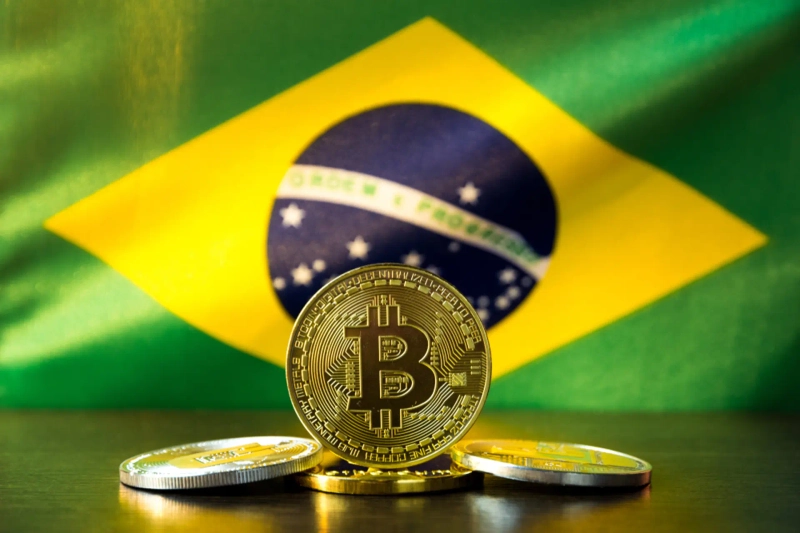
Brazil’s central bank will require cryptocurrency exchanges to delay certain transfers to foreign platforms and self-custody wallets for up to 24 hours under new anti-fraud rules that extend payments-sector controls to digital assets.
Resolution BCB No. 584/2026, published Aug. 7, takes effect Jan. 1, 2027. It applies when a customer deposits Brazilian reais or cryptocurrency with a regulated provider and then attempts to move the resulting assets to a foreign crypto company or a wallet the customer controls.
Transfers exceeding the equivalent of $10,000 will generally face a precautionary hold. The threshold covers both a single transaction and multiple transfers made by the same customer during one day. Smaller transactions can also be delayed when an exchange’s risk systems identify circumstances that require further review.
The central bank said cryptocurrencies, including stablecoins, are increasingly being used to move funds obtained through financial fraud before victims or financial institutions can recover them. Once funds enter crypto infrastructure, they can be transferred between wallets or across borders within minutes.
The hold is not an automatic seizure or permanent freeze. Exchanges can release a transaction before the full 24 hours if their review finds no indication of fraud, but they must document the decision and the risk factors considered. Customers must also be told when a transfer has been delayed and how long the review may last.
How Will Exchanges Decide Which Transactions Are Risky?
The regulation places much of the responsibility on exchanges. Providers will need to consider the customer’s risk profile, the nature of the transaction, the service being used, characteristics of the receiving party and the jurisdiction where the assets are being sent.
That means two transfers of the same size may receive different treatment. A long-standing customer withdrawing to a previously verified wallet may present a different risk profile from a newly opened account that receives reais and immediately sends cryptocurrency to an unfamiliar foreign platform.
Stablecoins are covered alongside assets such as bitcoin and ether. Their inclusion is important because dollar-linked tokens allow users to move relatively stable value across borders without relying on conventional bank transfers.
The central bank can impose tougher conditions on providers that fail to meet the requirements. It may require holding periods longer than 24 hours, extend the controls to transactions below the $10,000 threshold or restrict an institution’s ability to approve early releases.
Crypto companies will also have to maintain daily records of fraud and attempted fraud, along with corrective measures taken in response.
Investor Takeaway
The rule does not ban self-custody or overseas crypto transfers. It creates a regulated checkpoint before assets leave an exchange, making withdrawal speed increasingly dependent on a platform’s fraud controls and assessment of individual customers.
Why Does The Rule Matter For Self-Custody?
Self-custody remains legal, but the new framework changes how quickly users may be able to move assets from regulated exchanges into wallets they personally control.
Crypto users have generally expected withdrawals to settle quickly once funds have cleared and identity checks are complete. Under the Brazilian framework, a customer could deposit reais, purchase bitcoin and then face a delay before transferring the assets to a hardware wallet.
From the regulator’s perspective, that delay creates time to react when criminals gain access to bank accounts, convert stolen funds into crypto and attempt to move them beyond the reach of regulated institutions.
The $10,000 threshold limits the number of transactions automatically affected, but exchanges can apply holds below that level. That discretion may become the more important part of the system because fraudsters could otherwise divide transfers into smaller amounts.
It also creates uncertainty for legitimate users. Different exchanges may reach different conclusions about nearly identical withdrawals because their risk models, customer histories and fraud controls differ.
Could The Rule Push Users Toward Offshore Platforms?
Brazil has been bringing crypto companies closer to the standards applied to banks and payment providers. Legislation passed in 2022 established the legal framework for virtual asset services, while rules issued in November 2025 introduced authorization, operating and reporting requirements for crypto intermediaries, custodians and brokers.
Resolution 584 adds direct anti-fraud controls to crypto transfers, but industry representatives have warned that additional restrictions could raise costs for legitimate customers and make domestic exchanges less competitive.
Regina Pedroso, president of Brazilian tokenization association Abtoken, argued that users could move some activity toward providers in other jurisdictions if Brazilian platforms become slower or more restrictive.
That creates a difficult balance. Holding suspicious withdrawals may improve the chances of recovering stolen funds, while routinely delaying legitimate transactions could encourage experienced users to find routes outside the regulated domestic market.
The early-release provision gives exchanges room to avoid that outcome. Providers with effective fraud systems should be able to recognize established customers and familiar withdrawal behavior while reserving longer reviews for unusual transactions.
The practical impact will therefore depend less on whether the maximum delay is 24 hours and more on how often exchanges use it. If holds remain targeted, the rule may function mainly as a fraud-control mechanism. If platforms routinely delay large withdrawals, it could introduce a new layer of friction between Brazilian users and self-custody.
The broader message is that regulators increasingly control the gateways between traditional money and blockchain networks. Crypto transactions may settle continuously, but access from regulated exchanges is becoming subject to many of the same compliance checks already used elsewhere in finance.