Jamie Dimon had a pointed question for corporate America.
Speaking to Bloomberg on Oct. 6 on the sidelines of a JPMorgan event in London, the bank’s CEO asked whether companies, leveraged or not, are prepared for higher credit spreads when they have to refinance or borrow money.
Households would do well to ask themselves the same thing. Higher borrowing costs for companies tend to travel down the line to mortgages, car loans, and credit cards. Companies under pressure may also cut jobs or slow hiring to protect profits.
Also read: JPMorgan’s CEO sends stern bond market warning to investors
Why money is getting more expensive
Dimon’s warning is about competition for cash. He said the market will keep asking for more, and that at some point the pressure feeds into corporate debt and credit spreads.
His comments came during a global bond sell-off fed by the war in Iran and the AI boom’s appetite for capital. That sell-off pushed the 10-year Treasury yield past levels last seen in 2002.
The AI boom is a big part of that demand. The four largest cloud companies are projected to spend about $725 billion on capital projects this year. That is up about 77% from 2025 and represents nearly all of their combined operating cash flow.
Goldman Sachs expects them to fund more than a third of their 2027 spending with debt, as reported by TheStreet.
That borrowing lands in the same pool of money the government taps. Dimon argues that tech companies building data centers are competing with the U.S. Treasury for the same funds. The national debt hit a record of about $40.25 trillion at the start of October, according to Moneywise.
Inflation is not helping either. Dimon described it as “the skunk at the party” in his April 6 shareholder letter, and said it could keep climbing in 2026 as the Iran conflict pushes energy costs higher. He also pushed back on the idea that AI spending is a bubble, writing that he does not see it that way.
The strain is already showing
JPMorgan’s own strategists have spotted trouble in corporate debt. Leveraged loans trading below 60 cents on the dollar rose to $65 billion from $40 billion a year earlier. That is the most since March 2020, a jump of more than 60% in a year.
Technology companies make up a large share of the problem. The sector accounts for 39% of distressed loans.
The bank’s strategists expect default rates on both high-yield bonds and leveraged loans to rise in 2027, Bloomberg reported. In all, 141 issuers had loans trading below 80 cents, 35 more than a year earlier.
Riskier corners of the bond market are flashing warnings too. The cost of insuring U.S. junk bonds against default has widened significantly in the credit default swap market.
Dimon has warned the fallout could be painful. Speaking in Norway on April 28, he said there has not been a credit recession in a long time, and the next one could be worse than people think. He pointed to geopolitics, oil, and government deficits as risks that keep building.
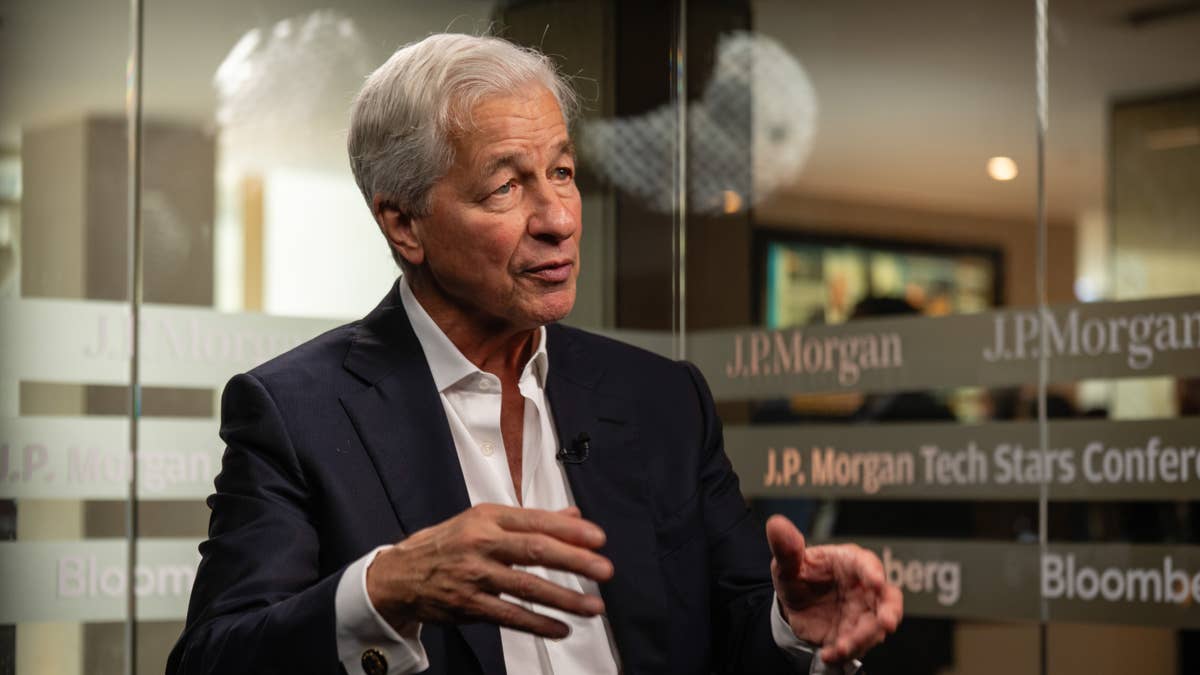
Bloomberg / Getty Images
How it reaches your household
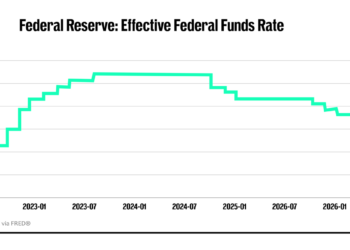
The Federal Reserve has made borrowing more expensive as well. On Sept. 16, it raised its benchmark rate by a quarter point to a range of 3.75% to 4%. It was the Fed’s first increase since 2023, and most officials expect at least one more hike before year-end.
Inflation remains above the Fed’s 2% target. Higher energy prices have played a role.
More JPMorgan:
- JPMorgan just put a different spin on the stock market selloff
- JPMorgan reveals stocks worth buying in October 2026
- JPMorgan sends a strong message to Mag-7 stock investors
Mortgages felt it quickly. The average 30-year mortgage rate passed 7% in late September for the first time since January 2025, reported by TheStreet. Mortgage rates tend to follow the 10-year Treasury yield more closely than the Fed’s own rate. Higher rates could also keep more buyers on the sidelines.
Credit cards are an even bigger drain. Americans owed about $1.25 trillion on their cards in the first quarter. The average rate on balances was about 21.5%, which works out to roughly $114 a month in interest on a $6,500 balance. New card offers were averaging even higher, near 24%.
Car buyers are not in a much better spot. LendingTree data put the average monthly payment on a new vehicle at $770 in the first quarter, the highest on record.
How to get prepared
The fix starts with knowing what you owe. Moneywise suggests listing every debt and paying off the highest-interest balances first. It also recommends thinking twice about new loans, especially floating-rate ones, and building an emergency fund. That matters even more for anyone planning to refinance a mortgage or roll over a car loan next year.
Card debt is usually the place to start. Paying down the highest-rate card first, asking issuers for a lower rate, or using a balance transfer can help. Transfer fees often run 3% to 5%.
Dimon’s advice to companies works just as well at the kitchen table. “The best thing to do with any of these things is deal with it before it becomes a crisis,” he said.
Related: JPMorgan CEO has strong warning on America’s skilled workforce