Building wealth rarely comes down to one lucky stock pick. It takes time, discipline and the ability to recognize opportunities others might miss. Berkshire Hathaway’s legendary investor spent decades building one of the world’s largest fortunes, but when asked how he would do it all over again, his answer was surprisingly simple.
At Berkshire Hathaway’s annual shareholders meeting in May 1999, an attendee named Grant Morgan asked Buffett what he would do if he were starting over in his early 30s. Morgan wanted to know how Buffett would replicate his success and, ultimately, make $30 billion.
“My question is, if you are starting out again today in your early 30s, what would you do differently or the same in today’s environment to replicate your success? In short, Mr. Buffett, how can I make $30 billion?” Morgan asked.
“Start young,” Buffett replied, drawing laughter from the audience.
Also read: Warren Buffett warns of a reality check coming for stock investors
At the time, Buffett’s fortune was roughly $30 billion. More than 27 years later, his wealth has grown to well over $100 billion, even after decades of charitable giving. But his answer wasn’t a promise that $10,000 could turn into billions. It was a look at the principles he would use to build wealth again, starting with the advantage that money has when it gets enough time to grow.
Buffett explained the power of compounding
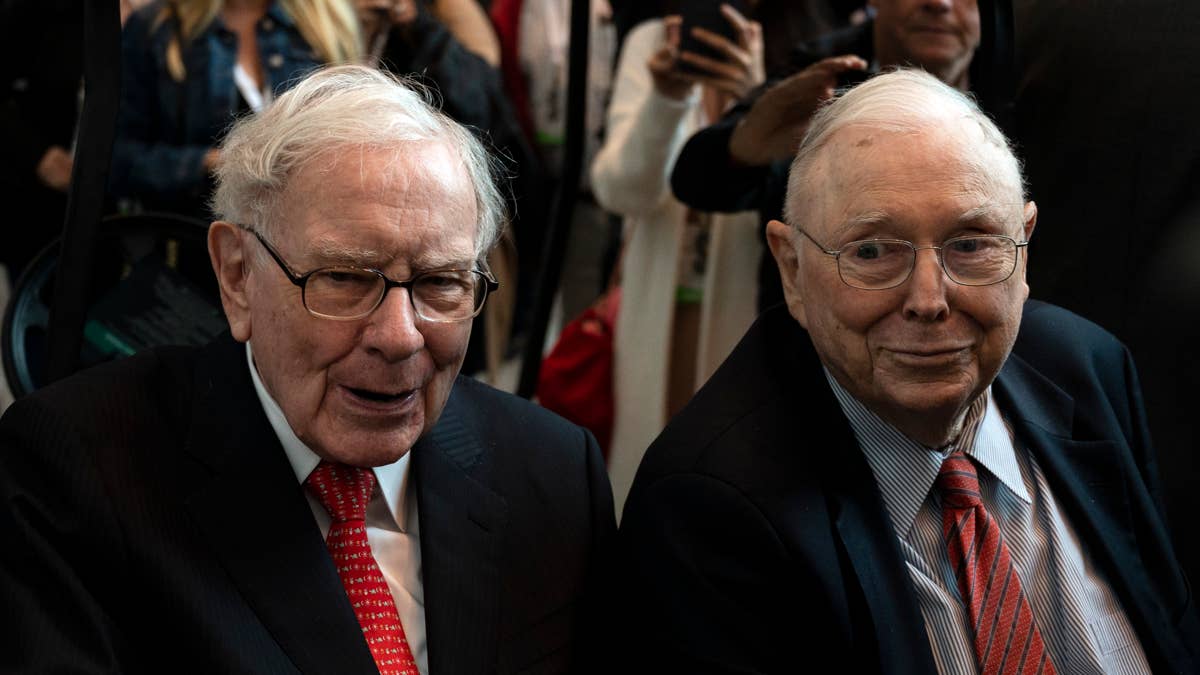
Buffett credited time as one of the biggest advantages he and his longtime business partner, Charlie Munger, had when building their wealth.
“Charlie’s always said that the big thing about it is we started building this little snowball on top of a very long hill,” Buffett said at the meeting. “So we started at a very early age in rolling the snowball down.”
He compared compound interest to a snowball that grows as it rolls downhill, with returns building on previous gains. The longer the process continues, the more opportunity investments have to compound.
“The trick is to have a very long hill,” Buffett said, “which means either starting very young or living very — to be very old.”
The principle applies well beyond stock picking. Money invested earlier has more time to earn returns, and those returns can generate additional gains. Investments can lose value, of course, but starting early gives compounding more time to work.
How Buffett would invest $10,000
When asked what he would do with $10,000 if he were graduating from school and starting over, Buffett said he would begin by examining companies alphabetically.
“I’d start with the As,” Buffett said. He would work through businesses one by one, paying particular attention to smaller companies, where investors working with modest sums might find opportunities that larger investors overlook.
Also read: Mark Cuban says one skill is key to making $1 million ‘every single time’
Buffett acknowledged that the market had changed since he began investing in the early 1950s. Finding undervalued companies had become harder, but he said the basic process would remain the same.
“You have to buy businesses and you — or little pieces of businesses called stocks — and you have to buy them at attractive prices, and you have to buy into good businesses,” Buffett said.
JOHANNES EISELE / Getty Images
He also warned against expecting someone else to uncover every opportunity. Investors need to understand what they know, recognize what they don’t know and do the work required to make informed decisions.
“And you can’t look around for people to agree with you,” Buffett said. “You can’t look around for people to even know what you’re talking about. You know, you have to think for yourself.”
Charlie Munger offered another lesson about building wealth
Munger added a practical point about the challenge of accumulating money in the first place.
“The hard part of the process for most people is the first $100,000,” Munger said at the meeting. “If you have a standing start at zero, getting together $100,000 is a long struggle for most people.”
He pointed to three habits that could help people get there faster:
- making rational decisions
- staying alert to opportunities
- spending substantially less than they earn.
That advice addresses a part of investing that can get lost in discussions about returns. The amount available to invest matters, too. Saving consistently creates the foundation that allows compounding to take hold.
Buffett’s investment advice still matters today
More than 27 years after that exchange, investors have access to online research, low-cost brokerages and index funds that can provide exposure to hundreds of companies. Yet the core challenge remains the same: finding a sensible way to invest, controlling costs and staying patient through market swings.
More Warren Buffett:
- Warren Buffett reveals he broke his own investing pattern
- Warren Buffett has a blunt take on today’s market
- Warren Buffett pulls no punches on stock market for 2026
For people who don’t want to analyze individual businesses, Buffett has repeatedly recommended low-cost S&P 500 index funds as a straightforward way to invest in a broad group of major U.S. companies. Those funds still carry market risk, but they offer an alternative to trying to identify a handful of winning stocks.
Buffett is no longer Berkshire Hathaway’s CEO. Greg Abel took over the role in January 2026, while Buffett remains associated with the company as chairman emeritus.
His role has changed, but the principles behind his investment philosophy remain recognizable. Start early when possible, buy good businesses at attractive prices, spend less than you earn and give investments time to grow.
The $30 billion question was asked with a laugh. Buffett’s answer was grounded in decades of experience. Building wealth from $10,000 was never about finding a shortcut. It was about making sound decisions and giving them enough time to add up.
Related: Read more