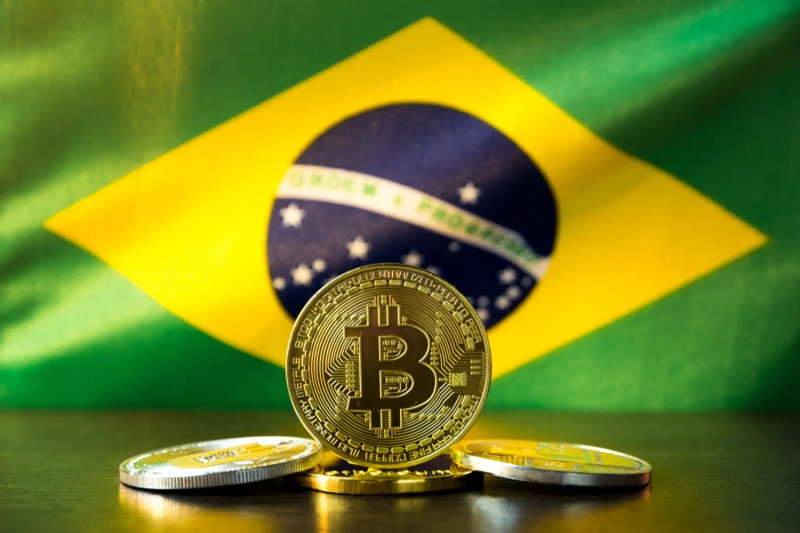
Brazil will require regulated crypto companies to report transfers worth $10,000 or more involving self-custody wallets beginning October 1, significantly expanding government monitoring of digital-asset transactions moving outside centralized platforms.
The Central Bank of Brazil announced the requirement on September 23 as part of new anti-money-laundering and counter-terrorist-financing rules for virtual-asset service providers.
Under BCB Resolution No. 588, transfers of virtual assets equal to or exceeding the equivalent of $10,000 that move to or from a self-custody wallet must be specifically reported to the Council for Financial Activities Control, or COAF, Brazil’s financial-intelligence unit.
The requirement takes effect on October 1, 2026. Crucially, the threshold is a reporting trigger rather than a transaction limit. Brazilians remain permitted to hold crypto in wallets where they control their own private keys and can transfer amounts exceeding $10,000.
Self-Custody Moves Deeper Into AML Framework
The central bank said self-custody creates a particular monitoring challenge because transactions involving wallets controlled directly by users can provide financial institutions with less information than transfers between regulated custodians.
The new rule therefore requires covered service providers to notify COAF when they facilitate qualifying transfers in either direction.
A $12,000 withdrawal from a regulated Brazilian crypto platform into a customer’s self-custody wallet, for example, would trigger the reporting requirement. So would a qualifying transfer moving from a self-hosted wallet into a covered provider.
The measure does not mean the wallet itself must register with the government, and the individual wallet owner is not being given a new transaction-by-transaction filing obligation under Resolution 588.
Brazil is also applying the $10,000 reporting threshold to foreign-exchange transactions involving the delivery or receipt of physical foreign currency, bringing the two categories under similar automatic communication standards.
The October rule is separate from another self-custody measure Brazil adopted in August.
Under Resolution 584, certain transfers above $10,000 destined for self-custody wallets or foreign virtual-asset providers can be subject to a precautionary delay of up to 24 hours while the provider conducts fraud-risk analysis. That measure takes effect on January 1, 2027, not October 1.
Brazil Builds Broader Crypto Reporting System
The new COAF requirement arrives as Brazil rapidly expands its digital-asset reporting infrastructure.
Since July, crypto transactions have been reported to the Federal Revenue Service under DeCripto, the reporting system created through Normative Instruction RFB No. 2,291/2025. The framework aligns Brazil’s crypto reporting system with the OECD’s Crypto-Asset Reporting Framework and also extends reporting requirements to foreign crypto service providers targeting Brazilian customers.
Brazil’s tax authority says stablecoins now account for roughly 80% of the crypto transaction volume declared in the country, illustrating why digital-asset transfers have become an increasingly significant focus for regulators.
October 1 is also an important deadline for the industry itself. Existing virtual-asset service providers must formalize their applications for authorization with the Central Bank during October as Brazil moves crypto businesses into its regulated financial framework.
The latest measure therefore adds another layer of oversight rather than restricting self-custody itself.
Users can continue controlling their own private keys and moving assets into or out of self-hosted wallets. But once a regulated intermediary is involved, transfers at or above the $10,000 threshold will leave a clearer regulatory trail.
From October 1, those transactions will automatically enter Brazil’s financial-intelligence reporting system even when the provider has not independently identified the transaction as suspicious.