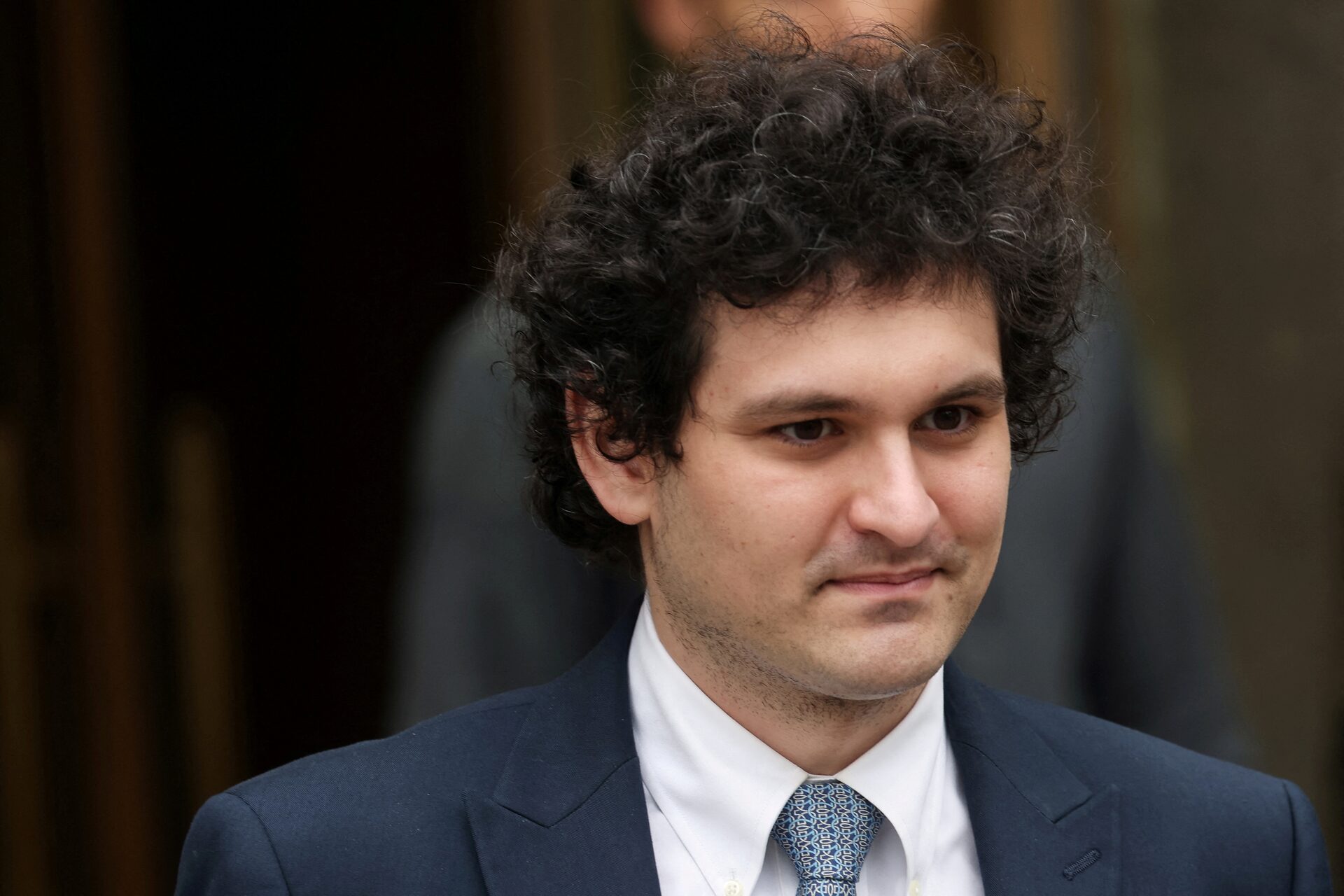
The former FTX CEO filed his petition for a writ of certiorari on September 10 after the Second Circuit rejected his appeal in June. The Supreme Court docketed the case as Bankman-Fried v. United States on September 15, initially setting an October 15 response deadline before granting the government a one-month extension on October 13.
Bankman-Fried is asking the Supreme Court to review both his conviction and the forfeiture order, but filing a petition does not mean the justices will hear the case. The immediate question is whether at least four justices vote to grant certiorari after the government responds and the case is distributed for conference.
What Is Bankman-Fried Asking the Supreme Court to Decide?
Bankman-Fried’s petition centers on two legal issues. The first concerns evidence about FTX customers’ eventual losses and whether the trial court improperly prevented him from presenting evidence that investments made with customer funds retained sufficient value to repay them.
His lawyers argue that prosecutors told jurors FTX customers had lost billions even though the government’s legal theory did not require proof that customers ultimately suffered permanent economic losses.
The Second Circuit rejected that argument. It held that customers were defrauded when Bankman-Fried transferred their money to Alameda Research without authorization, regardless of whether he believed the funds could later be returned. The appeals court upheld all seven fraud and conspiracy convictions and left his 25-year sentence intact.
The petition relies partly on an earlier First Circuit fraud case in which a new trial was ordered after evidence of investment losses and prosecutors’ descriptions of risky trading were found capable of prejudicing jurors on an issue that was not necessary to prove the government’s fraud theory.
Investor Takeaway
The Supreme Court fight is about trial fairness and fraud law, not whether later FTX recoveries retroactively erase the misuse of customer funds.
Does FTX Repaying Creditors Help Bankman-Fried?
FTX’s bankruptcy estate has recovered far more value than many observers expected immediately after the exchange collapsed in November 2022. The Recovery Trust began another approximately $900 million distribution in July, pushing estimated cumulative creditor payouts toward $10 billion.
Some creditor classes have received recoveries exceeding the dollar value of their allowed bankruptcy claims. But FTX’s creditor repayments are calculated under the bankruptcy process, where cryptocurrency claims were generally valued around petition-date prices rather than at subsequent market highs.
More importantly for Bankman-Fried’s criminal case, the Second Circuit ruled that eventual repayment did not eliminate the underlying fraud. The court treated the unauthorized transfer of customer property as the relevant deprivation rather than requiring prosecutors to prove that victims would permanently lose the money.
That position also finds support in the Supreme Court’s 2025 Kousisis decision, which held that fraudulent inducement can constitute federal wire fraud even when the victim receives something of equivalent economic value. Bankman-Fried’s petition therefore faces the challenge of showing that his evidentiary argument raises a separate trial-prejudice issue despite that broader fraud precedent.
Why Could the $11 Billion Forfeiture Be the Stronger Issue?
The petition separately attacks the $11.02 billion forfeiture order under the Eighth Amendment’s prohibition on excessive fines.
Bankman-Fried argues that the judgment effectively creates a lifetime obligation because he has no remaining assets capable of satisfying it and the government could pursue future earnings after his release from prison.
The Second Circuit acknowledged that $11 billion was a very large forfeiture, particularly in a case where many victims may ultimately be repaid, but upheld the judgment. It said federal forfeiture law can measure the amount using proceeds or property involved in the offenses rather than simply matching the victims’ eventual net losses.
A Supreme Court ruling confined to forfeiture would not necessarily disturb Bankman-Fried’s conviction or prison sentence. The justices could theoretically address the financial judgment without ordering a new criminal trial.
Investor Takeaway
The forfeiture question has consequences beyond FTX because it tests how far lifetime financial penalties can extend when fraud victims later recover substantial amounts.
What Happens After November 16?
Once the government files its response, Bankman-Fried may submit a reply before the petition is distributed to the justices for conference. If four justices vote to hear the case, briefing and oral arguments would follow. If fewer than four agree, the petition will be denied and the Second Circuit judgment will remain in place.
Bankman-Fried is separately pursuing the possibility of executive clemency, but that route is independent of the Supreme Court case. In July, the U.S. Senate unanimously adopted a nonbinding resolution opposing clemency for the former FTX executive.
For now, the November 16 government response is the next formal milestone. The Supreme Court has not agreed to hear the case, and Bankman-Fried’s conviction, 25-year prison sentence and $11.02 billion forfeiture judgment all remain in force.