Anthropic sent a letter to the White House and several U.S. senators this week, alleging an industrial-scale effort by Alibaba to access its Claude models, according to a Seeking Alpha report.
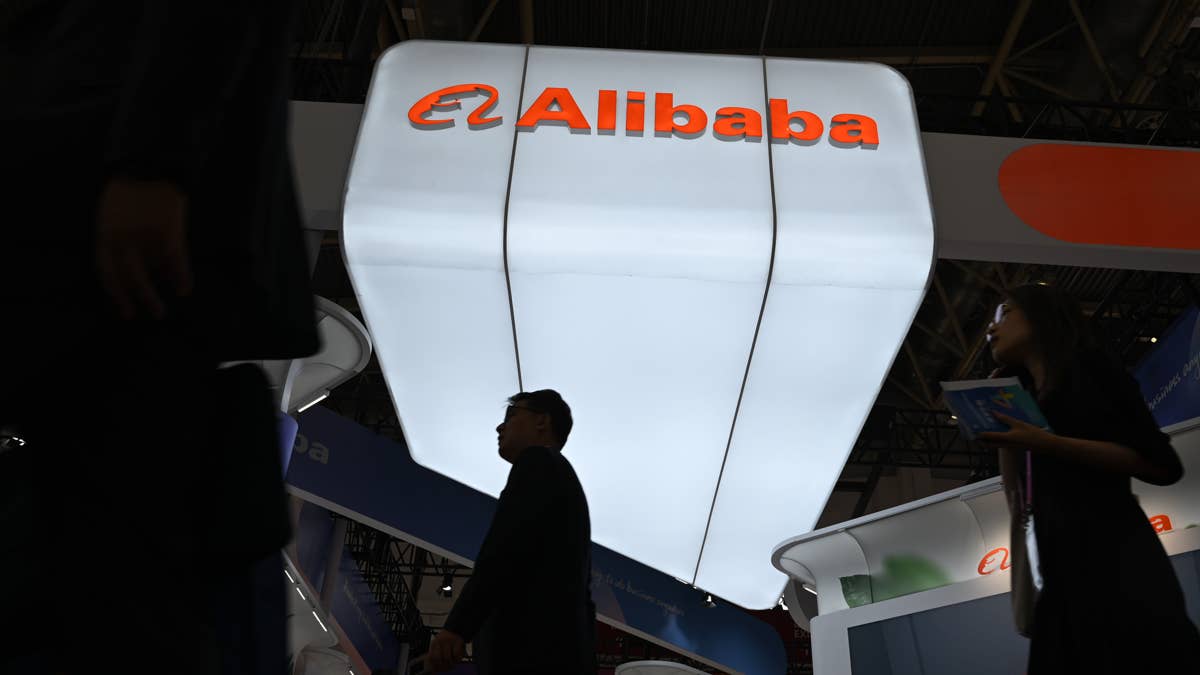
The accusation landed four days after Alibaba sued the Pentagon over an unrelated blacklist designation, CBS News confirmed. One company, two separate fights with Washington, in the same week.
The letter named Alibaba’s Qwen lab and described roughly 25,000 fraudulent accounts running queries against Claude between April 22 and June 5, Bloomberg reported.
Those accounts generated 28.8 million exchanges, a volume Anthropic called the largest distillation attempt it has documented against its own models.
The queries were not casual chats. Anthropic said operators targeted Claude’s software engineering and agentic reasoning capabilities, the two skills investors weigh most heavily when pricing frontier AI valuations.
This is not Anthropic’s first disclosure of this kind. In February, the company named DeepSeek, Moonshot AI, and MiniMax in a similar campaign totaling roughly 16 million exchanges across 24,000 accounts.
Alibaba’s alleged campaign nearly doubled that volume, in roughly the same span of time, after the White House had already warned Chinese labs to stop, CNBC noted.
Alibaba is fighting two fronts at once
The distillation accusation is not Alibaba’s only problem in Washington. The Pentagon added the company to its list of alleged Chinese military companies on June 8, alongside Baidu and BYD.
Alibaba disclosed in a regulatory filing that it considers the designation a mistake and intends to pursue all available legal action.
Related: OpenAI, Cerebras deal was supposed to be good news
On June 23, Alibaba followed through, suing the Defense Department in federal court in San Jose.
The lawsuit argues the designation lacks evidentiary support and that Alibaba spent months supplying evidence the Pentagon never answered.
The timing compounds the exposure. A blacklist fight over alleged military ties is now sitting next to an accusation that Alibaba’s own AI lab evaded an American company’s safeguards to harvest its technology.
Investors weighing BABA don’t need to believe both claims. They only need to notice that both are now in the same file in Washington.
Neudecker/picture alliance/Getty Images
The chip war just got a software sequel
Washington’s effort to slow China’s AI progress began with hardware. Export controls on advanced chips have tightened steadily since 2022, and Nvidia’s access to the Chinese market remains tangled in licensing terms, even after a partial approval earlier this year.
Distillation accusations extend that fight to software. If a Chinese lab can approximate a frontier model’s behavior by querying it millions of times, chip restrictions lose some of their bite.
More Anthropic:
- Anthropic doubles down on safety with Claude ID checks
- Amazon CEO just made things uncomfortable for Anthropic
- White House latest verdict flips script on Anthropic
The model’s outputs become the resource worth protecting, not just the silicon that trained it.
China has already narrowed the compute gap once, when DeepSeek built a competitive model on a fraction of the disclosed budget of its U.S. rivals.
Whether that gap narrows again now depends less on chip supply and more on whether Washington can stop frontier model outputs from training Chinese rivals from outside its own servers.
Wall Street hasn’t priced the resolution
None of this resolves with a fine or a press release. Anthropic wants Washington to treat distillation as a national security threat, with enforcement tools currently reserved for chip exports.
A bill that would create exactly those tools is sitting in Congress, unmoved since April.
Alibaba, meanwhile, is asking a federal court to separate its commercial AI ambitions from its alleged military ties, an argument that gets harder to make the longer Anthropic’s letter circulates on Capitol Hill.
BABA shares fell on the news and are still falling. This is a sign the market is treating this as more than a diplomatic spat.
The open question is not whether Anthropic’s numbers hold up. It’s whether Washington decides distillation deserves the same blunt instruments already used on chips, before the next 28.8 million queries get logged.
If the government already treats frontier AI models as strategic assets worth guarding like weapons, it has the logic it needs to pass a bill that protects them the same way.
Related: White House latest verdict flips script on Anthropic