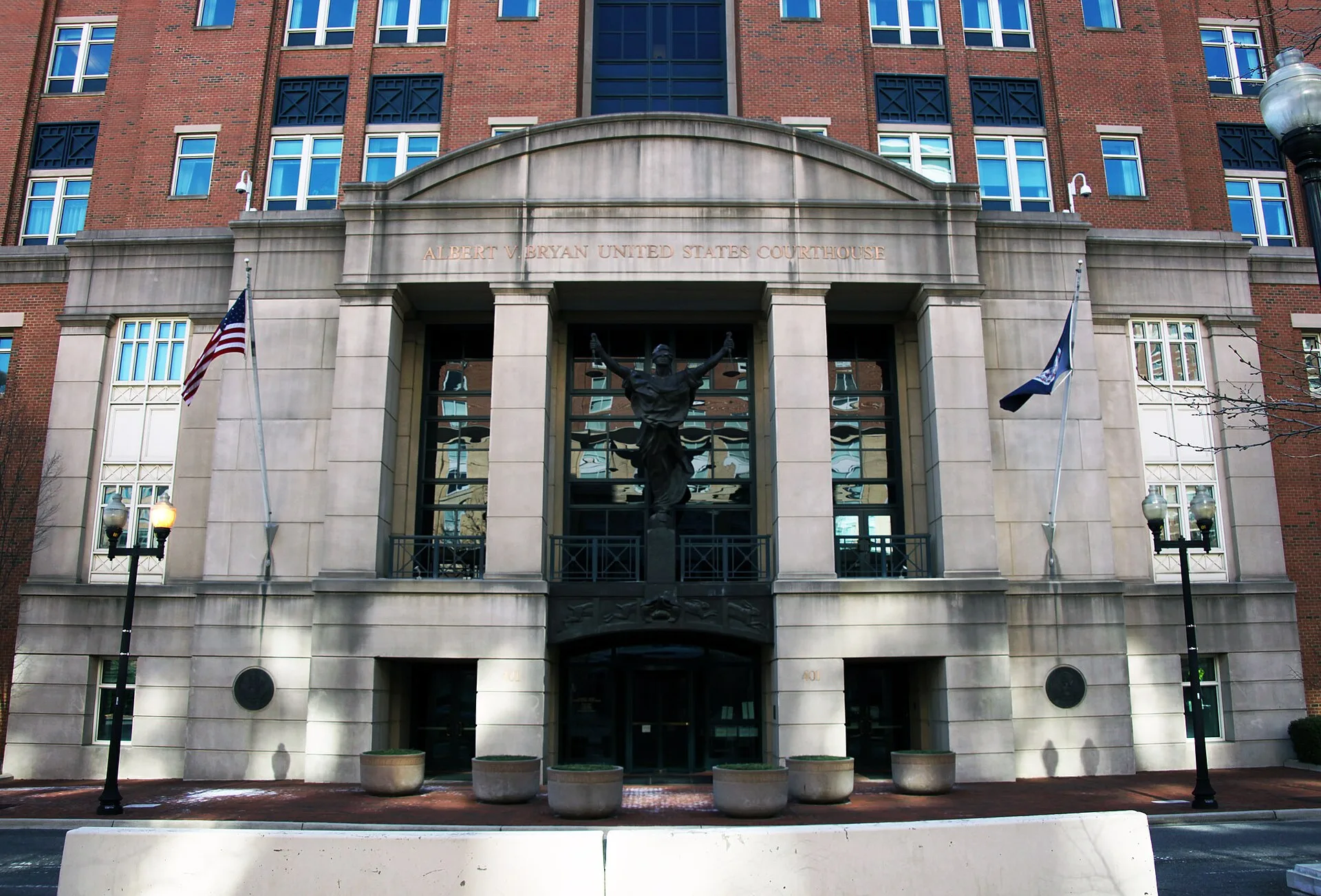
The Google ad tech remedy that landed on 2 September 2026 was read almost everywhere as a win for Alphabet, and on the surface it is: Judge Leonie M. Brinkema of the Eastern District of Virginia refused every structural remedy the Justice Department asked for, including a forced sale of the AdX exchange. The number that decides whether “Google won” is true is in none of that coverage. It is a take rate. The April 2025 liability ruling found AdX charged a durable supracompetitive take rate of 20% on each open-web display transaction for over a decade, against rivals who often charged closer to 10%. Ownership of the exchange was never the fee. The fee was the fee. And the behavioural package Brinkema accepted goes at that fee directly, which is why the word “won” is doing far too much work.
Here is the part the “Google escapes breakup” headlines skipped, and it sits in the opinion. On page 60 the court records that, on the calculations of plaintiffs’ liability expert Dr Tim Simcoe, the elimination of Unified Pricing Rules alone would reduce AdX’s take rate from 20% to approximately 16.6%, a level the opinion calls comparable to some AdX competitors, citing a demonstrative from Google’s own expert Dr Andres Lerner. That is a 3.4-point cut, roughly a sixth of the fee, extracted without a single share of AdX changing hands. Structural relief was denied; the economics of the asset were still re-priced. Those are not the same sentence, and the market has been trading the first one.
Key facts
- Structural remedies rejected: divestiture of AdX, open-sourcing of DFP’s auction logic and contingent divestiture of “DFP Remainder” — Order, ECF 1857, E.D. Va., 2 September 2026
- AdX take rate found at 20% per open-web display transaction, against rivals “often closer to 10%” — Memorandum Opinion, ECF 1858, 2 September 2026
- Scrapping Unified Pricing Rules alone modelled at 20% to about 16.6% on plaintiffs’ expert evidence — ECF 1858, p. 60
- Final Judgment term set at six years, not the 15 plaintiffs sought, and applied worldwide — ECF 1858, pp. 102-105
- Google Network revenue of $7.303bn in the June 2026 quarter, down 0.7% year on year while total Google advertising rose 14.4% to $81.629bn — Alphabet Form 10-Q, filed 23 July 2026
- The 106-page opinion was unsealed on 16 September 2026 after neither side sought redactions — Order, ECF 1860
- GOOGL last traded at $349.54, the regular-session close on 18 September 2026 — stockanalysis.com
What the court actually ordered, now that we can read it
One housekeeping point first. When the 2 September order came down, the reasoning behind it did not. Brinkema sealed the memorandum opinion for 14 days so the parties could move for redactions, warning that requests “must be kept to a minimum”. Neither side asked for any. On 16 September the court entered a one-page order unsealing it in full, a moment Forbes reporter Marty Swant flagged on X: “BREAKING: U.S. Judge Leonie Brinkema just unsealed the court’s 106-page opinion.” What follows is taken from that document, not a summary of it.
The holding is blunt. “The Court finds that structural remedies are neither realistic nor needed,” wrote Leonie M. Brinkema, United States District Judge for the Eastern District of Virginia, “and that the parties’ substantially overlapping behavioral remedies as modified in this Memorandum Opinion will be sufficient to ‘effectively pry open to competition’ the ad tech markets that were injured by Google’s unlawful conduct.” An AdX divestiture that looked like “a simple and elegant antitrust remedy” in the plaintiffs’ closing would in reality be “incredibly messy and highly risky”, the court found, partly because AdX transacts app, native and in-stream video inventory unrelated to the open-web display markets where liability was found.
What replaced it is not a slap on the wrist. Google must build an application programming interface letting Prebid solicit real-time bids from AdX for all indirect open-web display inventory, plus an API and server-to-server connection between DFP and Prebid so publishers can route indirect and programmatic direct demand through Prebid. AdX must submit real-time bids to rival publisher ad servers. Publishers can access and export their own historical, configuration and bid data out of DFP and AdX. First Look and Last Look cannot be reimplemented, and Unified Pricing Rules must be deprecated for all indirect transaction types. AdWords is barred from bidding preferentially into AdX or other Google tools, and from bidding directly into DFP. The Prebid deadline is 12 to 15 months, the court taking Google’s shorter timetable over the plaintiffs’ 18.
Two plaintiff asks were cut. The 15-year term became six, the court reasoning that markets “remarkable for [their] constant and rapid change” make a long decree “not unlike trying to shoe a galloping horse”. The proposed escrow fund and disgorgement of half of AdX and DFP net revenues was thrown out as untethered to the liability findings, the opinion noting it had expressly found Google did not use monopoly power to raise DFP’s prices. Against that, the injunction runs worldwide, and a Monitor plus a Technical Committee supervise compliance for the full six years.
The take rate is the trade, not the ticker
Having tracked this docket since the April 2025 liability opinion, the assumption consistently mispriced is that ad tech risk to Alphabet is binary: either the exchange is sold or nothing happens. This Google ad tech remedy is an argument against that framing written by the judge herself. The behavioural provisions, she wrote, “will help to restore competition among ad exchanges and exert a downward pressure on AdX’s supracompetitive take rate, a fruit of Google’s unlawful conduct.” Then comes the Simcoe figure, and the note that plaintiffs themselves conceded these provisions “would absolutely address our concern about the prior illegal conduct”.
So what does a few points off the take rate do to Alphabet? Nobody outside Mountain View can size it precisely, because Alphabet does not disclose AdX revenue. It does disclose the Google Network line, which carries AdMob, AdSense and Google Ad Manager revenues on a gross basis, with payments to partners booked in cost of revenue. In the quarter ended 30 June 2026, per the 10-Q filed on 23 July 2026, that line was $7.303bn against $7.354bn a year earlier. Over the half year it was $14.274bn against $14.610bn, down 2.3%. Everything else in advertising grew.
| Alphabet advertising lines, quarter ended 30 June 2026 | Q2 2026 | Q2 2025 | Change |
|---|---|---|---|
| Google Search & other | $63.271bn | $54.190bn | +16.8% |
| YouTube ads | $11.055bn | $9.796bn | +12.9% |
| Google Network | $7.303bn | $7.354bn | -0.7% |
| Google advertising, total | $81.629bn | $71.340bn | +14.4% |
| Total Alphabet revenues | $119.796bn | $96.428bn | +24.2% |
Source: Alphabet Inc. Form 10-Q for the quarter ended 30 June 2026, filed 23 July 2026. Percentage changes calculated by FinanceFeeds from the filed figures.
Google Network is 8.9% of Google advertising and 6.1% of group revenue, and it is the only advertising line going backwards. Apply the court’s arithmetic to it as an illustration, clearly labelled as this author’s calculation rather than a company disclosure. A 20% take falling to 16.6% removes about a sixth of the fee Google keeps. If the whole Network line carried AdX’s rate, the retained portion would drop from roughly $1.46bn a quarter to roughly $1.21bn, a gap of about $250m. It does not, because AdSense and AdMob sit in the same line on different economics, so the real figure is smaller. Against $119.8bn of quarterly group revenue that is a rounding error. Against a segment already shrinking, with a six-year decree, a court-appointed monitor and a mandatory pipe into a rival auction, it is a direction of travel. The earnings impact is immaterial; the structural story about who controls the auction is not.
What the parties and the industry said
The Justice Department did not read the outcome as a defeat. Its press release of 16 September 2026, headed “Department of Justice Again Wins Substantial Relief Against Google”, listed the Prebid integrations, the data-sharing obligations, the AdWords rule and the six-year monitor. “The Court’s ruling in the Google ad tech case marks a significant victory for this Department’s efforts to protect and restore competition,” said Stanley E. Woodward Jr., Associate Attorney General at the US Department of Justice. “We will continue to review the opinion to consider the Department’s options.” Keep that second sentence. The division amplified the release from its verified X account the same evening, noting the court rejected Google’s argument that remedies could not reach AdWords, the “golden goose” the opinion itself names.
Google’s framing was narrower and, on its own terms, accurate. “We’re very pleased the Court rejected the DOJ’s proposal to break apart tools that help small businesses reach new customers and grow,” said Lee-Anne Mulholland, Vice President for Regulatory Affairs at Google, in a statement issued on the day of the order. Note what the sentence does not claim. It celebrates the refusal of divestiture and is silent on the interoperability, data-export and bidding obligations the company itself proposed and then broadened during the remedies phase.
The most consequential outside voice belongs to the consortium that stands to gain. Prebid’s open-source header bidding software, the court found, has since 2015 “dramatically increase[d] publisher revenue”, partly because publishers can audit it. Michael Racic, President of Prebid, testified that publishers can “examine the Prebid auction to see transparently what’s happening and understand fundamentally why [they are] winning … [or] losing”. The opinion also records testimony that AdX’s take rates cut publisher margin and hurt the ability to “make money to support journalism”. Those witnesses lost the structural argument and won the plumbing.
What the tape actually did
GOOGL closed at $349.54 on 18 September 2026, up 0.64%, with an after-hours print of $350.83 at 19:59 ET; the anchor used throughout is the regular-session close, per stockanalysis.com. The 52-week range is $235.84 to $408.61 and the highest close of the past 12 months was $402.62 on 13 May 2026.
Now the two dates that supposedly mattered. On 2 September, the day a federal judge refused to break up Google’s advertising business, the stock closed at $337.12, up 0.63%. On 16 September, the day the 106-page explanation of what Google must instead do became public, it closed at $342.87, down 0.61%. On 14 September, an ordinary Monday with no docket activity, it rose 3.22%. The largest structural legal risk over the stock was removed and the tape barely noticed. Either the outcome was fully discounted or the market is not pricing this case at all, and with the shares 14.2% below their May high the second reading is at least as plausible. FinanceFeeds covered the day-one reaction in our note on GOOGL trading below Wall Street’s lowest published target after the ad tech ruling, and the valuation framing in our GOOG bull and bear case.
Conduct over structure is now the American default
Read alongside the search case, this opinion completes a pattern. Brinkema cites Judge Amit Mehta’s Google Search remedy repeatedly and adopts its logic wholesale: the six-year term, the 60-day effective date, the immediate monitor and technical committee, the refusal of a remedy whose “lack of specifics is fatal”. Where Mehta declined to force a Chrome divestiture, Brinkema declines an AdX divestiture for the same stated reason: dissolving a unitary technology company is logistically fraught and risks harm to third parties the antitrust laws exist to protect. Every pending US Big Tech case now has two data points saying the ceiling is conduct.
Alphabet’s own filing sets out the rest. Per the 10-Q, the search case final judgment was entered in December 2025, Google appealed in January 2026 and the DOJ and state attorneys general cross-appealed in February 2026. In the ad tech case the company states plainly that after final judgment it “plan[s] to appeal the adverse portion of the April 2025 decision and potentially aspects of the remedies decision”. Europe is on a different track: the Commission decided in September 2025 that Google had infringed competition law through self-preferencing on both sides of ad tech, imposed a fine Alphabet records at €3.0bn, and ordered it to cease the conduct. Alphabet appealed in November 2025, that appeal remains pending, and it took a $3.5bn charge in the third quarter of 2025 and posted bank guarantees rather than cash. For how fast private damages can follow a European finding, see the Stockholm court’s award to Klarna’s PriceRunner, accrued at $2.1bn in principal, interest and costs in the June 2026 quarter.
The call: three dated paths for the remedy
This is an analysis of how the Google ad tech remedy resolves, not a recommendation. Price levels appear only because they bracket the live $349.54 close and make the scenarios testable.
Base case, 55%. The parties meet, confer and file a single jointly proposed Final Judgment on or about 2 October 2026, tracking the opinion with a handful of provisions labelled as to proponent. The court enters it with minor edits, it takes effect 60 days later, monitor selection starts at once and Prebid work runs into late 2027. Google appeals the April 2025 liability finding and selected remedies terms; the DOJ weighs its options but the structural denial is not the hill. GOOGL spends the period in a $330 to $375 band, minus 5.6% to plus 7.3% from spot, with ad tech a non-factor next to capital expenditure and AI monetisation. Trigger: the 2 October filing is joint and short.
Upside case, 25%. The joint filing is clean, the DOJ declines to cross-appeal the rejection of structural relief, and the compliance build is scoped tightly enough that the Network line stabilises. The overhang closes at a cost the company absorbs and attention returns to Cloud and Gemini economics. A move back toward $385, plus 10.1% from spot, becomes reasonable on a re-rating unrelated to this docket. Trigger: no DOJ cross-appeal inside the appeal window after entry of judgment, plus a Google Network revenue line that stops shrinking in the next quarterly report.
Downside case, 20%. The parties fail to converge, the 2 October filing lists competing provisions, and the court orders further briefing, pushing entry into 2027. Alongside that the DOJ cross-appeals the denial of structural relief to the Fourth Circuit and the European Commission moves toward a structural requirement of its own, a risk Alphabet’s disclosure keeps live. Ad tech reverts to a tail risk with a European edge, and $300, minus 14.2% from spot, comes back into range on a broader de-rating. Trigger: a fragmented joint filing at the start of October, or a Commission statement rejecting the compliance plan.
Invalidation. If the Final Judgment as entered materially departs from the opinion, for instance if the Prebid deadlines slip beyond 15 months or the AdWords non-discrimination language is narrowed in drafting, the base case is void: the whole argument here rests on the conduct terms being real and enforceable rather than cosmetic.
What would change my mind. The take-rate thesis fails if Alphabet’s Google Network revenue reaccelerates while the integrations are being built. A return to year-on-year growth on that line, with the decree in force, would mean the auction terms are not binding on pricing and the structural denial was the whole story. Equally, if publishers do not route demand through Prebid once the APIs exist, the remedy is a compliance exercise, not a competitive one, and the fee holds at 20%.
FAQ
Is Judge Brinkema’s opinion public, or still under seal?
It is public. The 2 September order filed the memorandum opinion under seal for 14 days so the parties could seek redactions. Neither side did. On 16 September 2026 the court entered ECF 1860 unsealing it in full, and the 106-page document is on the docket in US v. Google LLC, 1:23-cv-00108 (E.D. Va.). Anything written about the remedy terms before that date worked from the two-page order alone.
Does the ruling force Google to cut AdX’s 20% take rate?
No. The court sets no price. It orders conduct changes, including deprecation of Unified Pricing Rules and mandatory interoperability with Prebid and rival ad servers, and finds those changes will “exert a downward pressure” on the take rate. The 16.6% figure is expert modelling of what scrapping Unified Pricing Rules alone would imply, not an ordered fee.
How long do the obligations last and where do they apply?
Six years from entry of the Final Judgment, with the court able to extend if the judgment is not fully satisfied. It takes effect 60 days after entry, except for appointing the monitor and forming the technical committee, which begins immediately. Unusually for a US decree, the injunction applies worldwide, because the court found the relevant ad tech markets are worldwide.
How much of Alphabet’s revenue is actually exposed?
Alphabet does not break out AdX. The closest disclosed proxy is Google Network revenue, $7.303bn in the quarter ended 30 June 2026, or 8.9% of Google advertising and 6.1% of group revenue, a line that also includes AdMob and AdSense. It fell 0.7% year on year while total advertising rose 14.4%, which is why the segment matters more as a signal than as a number.
Will there be an appeal?
Alphabet says so itself: its 10-Q states that after final judgment it plans to appeal the adverse portion of the April 2025 liability decision and potentially aspects of the remedies decision. Associate Attorney General Stanley E. Woodward Jr. said the department would “continue to review the opinion to consider the Department’s options”, leaving a cross-appeal open without committing to one.
This article is news analysis, not investment advice, and recommends no transaction in any security. Scenario probabilities and price levels are the author’s judgement based on the sources cited. Capital is at risk.