When a founder-CEO exits a large technology company, the market begins asking a question that cannot be answered quickly.
It is not whether the company has capable executives. It is whether those executives can carry the specific relationships, strategy, and credibility that the founder built over decades.
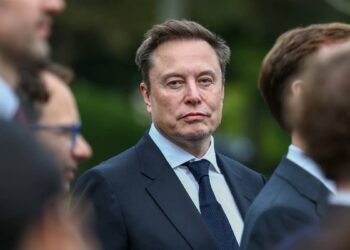
Nvidia (NVDA) is now inside that test. Jensen Huang resigned as chief executive on Nov. 12 after Nvidia’s board opened a formal investigation into his personal conduct.
Interim chief executive Colette Kress, the company’s longtime chief financial officer, stepped in immediately. Nvidia said it had no reason to believe company secrets had been compromised.
The question of what happens next has not been settled. The Financial Times reported that Huang is weighing a potential return to the company. Major technology investors are separately urging Nvidia’s board to keep that option open. No decision has been announced.
Huang built Nvidia’s AI franchise, and investors know it
Huang has led Nvidia since 1993. Under his direction, the company moved from gaming chips to data-center computing, and that shift put it at the center of the global build-out of artificial intelligence infrastructure.
The company’s graphics processing units became the standard hardware for training and running AI models at scale.
Also read: Michael Burry has a surprising new take on Nvidia stock
His relationships with major cloud customers, including Microsoft, Alphabet, and Amazon, were built over years of direct engagement. Those customers are spending hundreds of billions of dollars on AI infrastructure that runs on Nvidia hardware. Investors had already flagged before Huang’s departure that the company’s succession picture was unclear, 24/7 Wall St reported.
Nvidia’s position in the market is not only about chips. It includes software tools, supply commitments, and a next-generation hardware roadmap that customers plan purchasing cycles around.
Huang has been the face of that roadmap. His departure creates a question about whether the company’s execution pace holds while the board works out what comes next.
The concern is not an immediate operational breakdown. It is about execution over the next 12 to 18 months, when Nvidia has major product launches and supply commitments that need active management from someone customers recognize as the decision-maker.
Nvidia’s board faces 3 paths, and each carries risk
Nvidia’s board is now choosing between three paths, and each one carries a different kind of risk.
A full return by Huang would address investor concerns about continuity most directly. It would also invite questions about what the board’s investigation found and what conditions, if any, it has placed on his return.
An advisory role keeps Huang close to customers and strategy without returning his title.
That structure creates its own problem. Customers and partners dealing with Nvidia need to know who speaks for the company. If that is not clear, Kress has a harder time establishing herself in those conversations.
A permanent departure shifts the burden entirely onto Kress. Bloomberg reported as early as January 2026 that Nvidia had no clear internal successor to Huang. The board has not addressed that publicly. Whether it has worked through the question privately is what investors are trying to find out.
Investor pressure could push the board toward a faster timeline than it wants. Directors are unlikely to announce anything before they have worked through the process. The gap between those two timelines is where the tension will sit.
Bloomberg / Getty Images
A founder comeback comes with governance questions
Founder returns are not unusual in the technology industry. Steve Jobs came back to Apple in 1997. Michael Dell returned to Dell in 2007. Howard Schultz came back to Starbucks twice.
Each situation was different, but each raised similar questions about board independence and whether the company had developed leaders capable of running it without the founder present.
For Nvidia, the governance question is more complicated because of the specific circumstances of Huang’s departure. The board opened an investigation, concluded it, and accepted a resignation within a short window. If Huang returns, investors will want a clear explanation of what changed and what guardrails the board is putting in place.
That is not a hostile question. Institutional shareholders have fiduciary obligations that require them to ask it. A board that removes a CEO after a formal investigation and then reverses course needs to give a coherent account of its reasoning.
More Nvidia:
- Microsoft just gave Nvidia shareholders a reason to pay attention
- Nvidia has a stake in SpaceX that came from an unexpected place
- Nvidia’s $12.9 billion deal could shape the AI apps you use
A Huang return may well be the right outcome. But the board will need to explain the reasoning clearly. Institutional shareholders will have pointed questions, and a vague answer will not hold up under pressure from the same investors now urging the board to act.
Nvidia’s product roadmap is the real investor test
Leadership uncertainty matters most when a company is managing large capital commitments. Nvidia has a next-generation chip architecture moving through production, supply agreements with major data-center operators, and a software ecosystem that enterprise customers are actively building on.
Those commitments have delivery schedules. They need someone customers recognize as the decision-maker.
Customer procurement decisions for AI infrastructure involve long planning cycles. Companies making those decisions want to know who they are negotiating with and whether that person can speak for the organization.
Kress has been Nvidia’s chief financial officer since 2013. She knows the company’s financial structure, its customer base and its operational priorities. Her challenge is demonstrating that she can carry the strategic conversations Huang has led for more than 30 years, with the same confidence.
That is the practical test investors are running. The governance debate will play out at the board level. What customers and partners decide in the meantime is what will show up in Nvidia’s numbers.
Related: Jim Cramer has a strong take on Nvidia’s next chapter